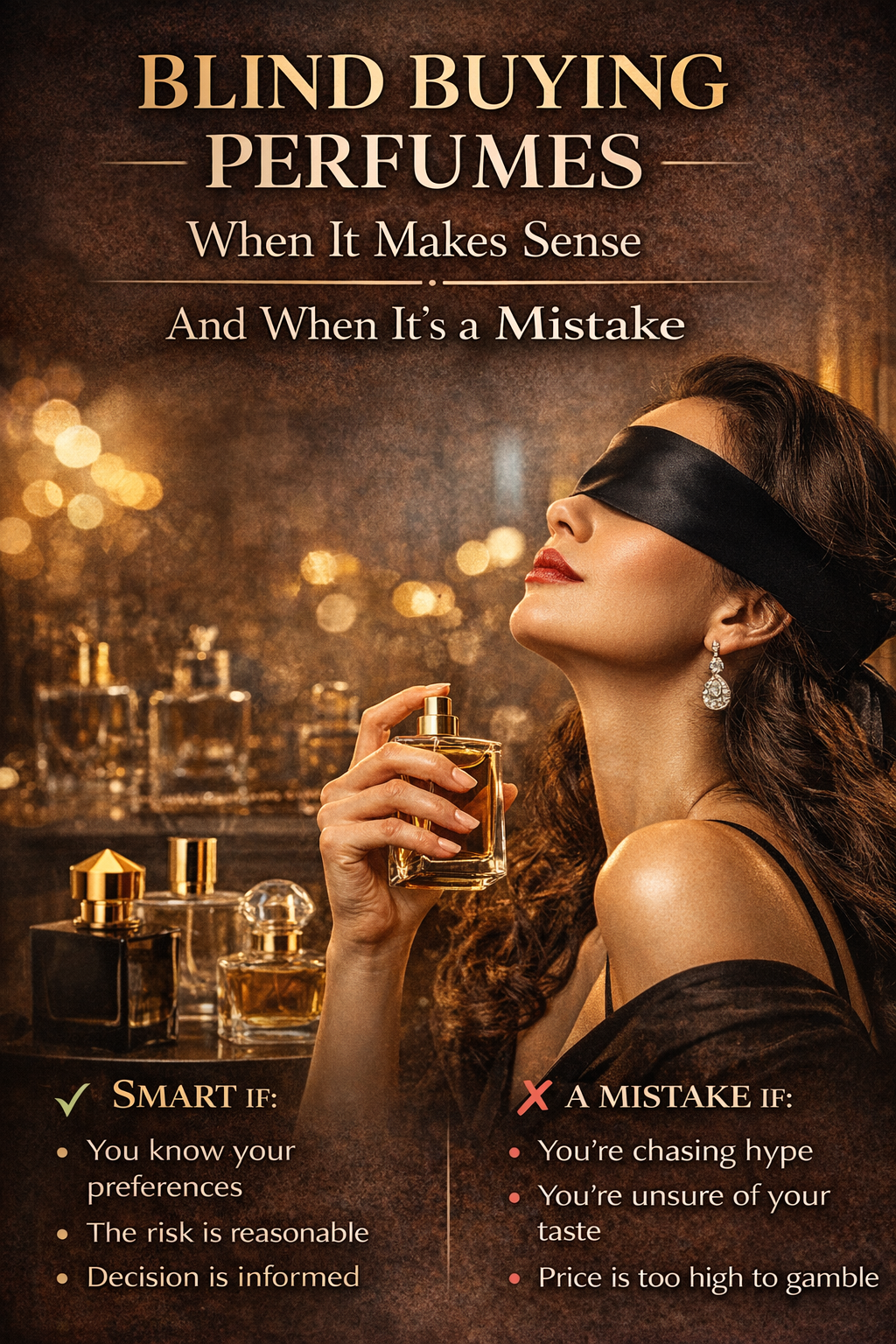
Blind Buying Perfumes: When It Makes Sense (And When It’s a Mistake)
Let’s be honest—most people who “blind buy” perfumes aren’t making strategic decisions.
They’re reacting to hype, aesthetics, or someone else’s opinion.
Sometimes it works.
Most times, it doesn’t.
If you don’t understand when blind buying is smart vs reckless, you’ll keep wasting money on bottles that end up sitting unused.
1. What Is Blind Buying (Really)?
Blind buying is purchasing a fragrance without smelling it first.
But there are two types of blind buyers:
A. Emotional Buyers
- Influenced by hype, TikTok, influencers
- Attracted by packaging or brand name
- No understanding of notes or performance
B. Strategic Buyers
- Understand fragrance structure
- Know their preferences
- Use data (notes, reviews, brand DNA)
Only one of these wins consistently.
2. Why Blind Buying Is So Popular
A. Limited Access
Not every niche or luxury fragrance is available to test locally. So people rely on online information.
B. Hype Culture
“Top 10 fragrances you must own” has created urgency and fear of missing out.
C. Convenience
Ordering online is easier than going to test physically.
3. When Blind Buying Actually Makes Sense
Blind buying is not the problem.
Uninformed blind buying is.
Here’s when it’s justified:
A. You Know Your Scent Profile
If you already know:
- You love oud-heavy fragrances
- Or vanilla gourmands
- Or fresh citrus scents
Then blind buying within that category is calculated risk, not guesswork.
B. You Understand the Brand DNA
Some brands are consistent.
If you’ve tried multiple fragrances from a house and understand their style, your chances of liking another release are higher.
C. The Price Justifies the Risk
Blind buying a ₦50K fragrance is not the same as blind buying ₦500K.
Lower price = acceptable risk
High price = you need certainty
D. You’re Buying for Collection, Not Just Use
Collectors don’t always buy for daily wear.
They buy for:
- Rarity
- Completeness
- Investment potential
In that case, smelling first is less critical.
4. When Blind Buying Is a Mistake
This is where most people fall.
A. You’re Following Hype Instead of Preference
Just because a fragrance is:
- Popular
- “Beast mode”
- Highly complimented
…doesn’t mean it fits you.
This is how people end up with expensive regrets.
B. You Don’t Understand Notes
If you don’t know:
- What oud smells like
- How patchouli behaves
- Whether you like sweetness
Then you’re guessing blindly.
And guessing at a high price point is not smart.
C. You Expect Universal Appeal
No fragrance works for everyone.
Skin chemistry, environment, and personal taste all affect how a scent performs.
Blind buying while expecting perfection is unrealistic.
D. You Ignore Climate
This is a major mistake in hot environments.
Heavy, sweet, or dense fragrances can become:
- Overpowering
- Suffocating
- Unwearable in heat
What smells amazing in reviews may fail completely in your climate.
5. The Hidden Cost of Blind Buying
It’s not just about money.
It’s about:
- Unused bottles
- Decision fatigue
- Loss of confidence in your taste
Over time, this leads to a chaotic collection with no identity.
6. How to Blind Buy Smarter
If you’re going to do it, do it properly.
Step 1: Learn Your Preferences
Know your:
- Favorite notes
- Preferred intensity
- Ideal performance level
Step 2: Research Beyond Hype
Look at:
- Detailed reviews (not just “this is amazing”)
- Fragrance breakdowns
- Real user experiences
Step 3: Start Small When Possible
- Decants
- Samples
- Travel sizes
This reduces risk significantly.
Step 4: Avoid Impulse Purchases
If you feel urgency, pause.
Most bad blind buys happen when people rush.
Step 5: Accept Imperfection
Even with strategy, not every blind buy will be perfect.
The goal is to reduce mistakes—not eliminate them.
7. The Smart Buyer vs The Emotional Buyer
This is the real difference.
Emotional Buyer:
- Buys based on hype
- Regrets often
- Has random collection
Smart Buyer:
- Buys based on knowledge
- Builds structured collection
- Rarely regrets purchases
8. Final Truth
Blind buying is not inherently bad.
But it exposes one thing clearly:
Whether you understand fragrance—or you’re just reacting to it.
If you’re guessing, you’ll keep wasting money.
If you’re strategic, you can build a collection with intention—even without smelling first.