Why Your First Impression Smell Matters More Than Your Outfit
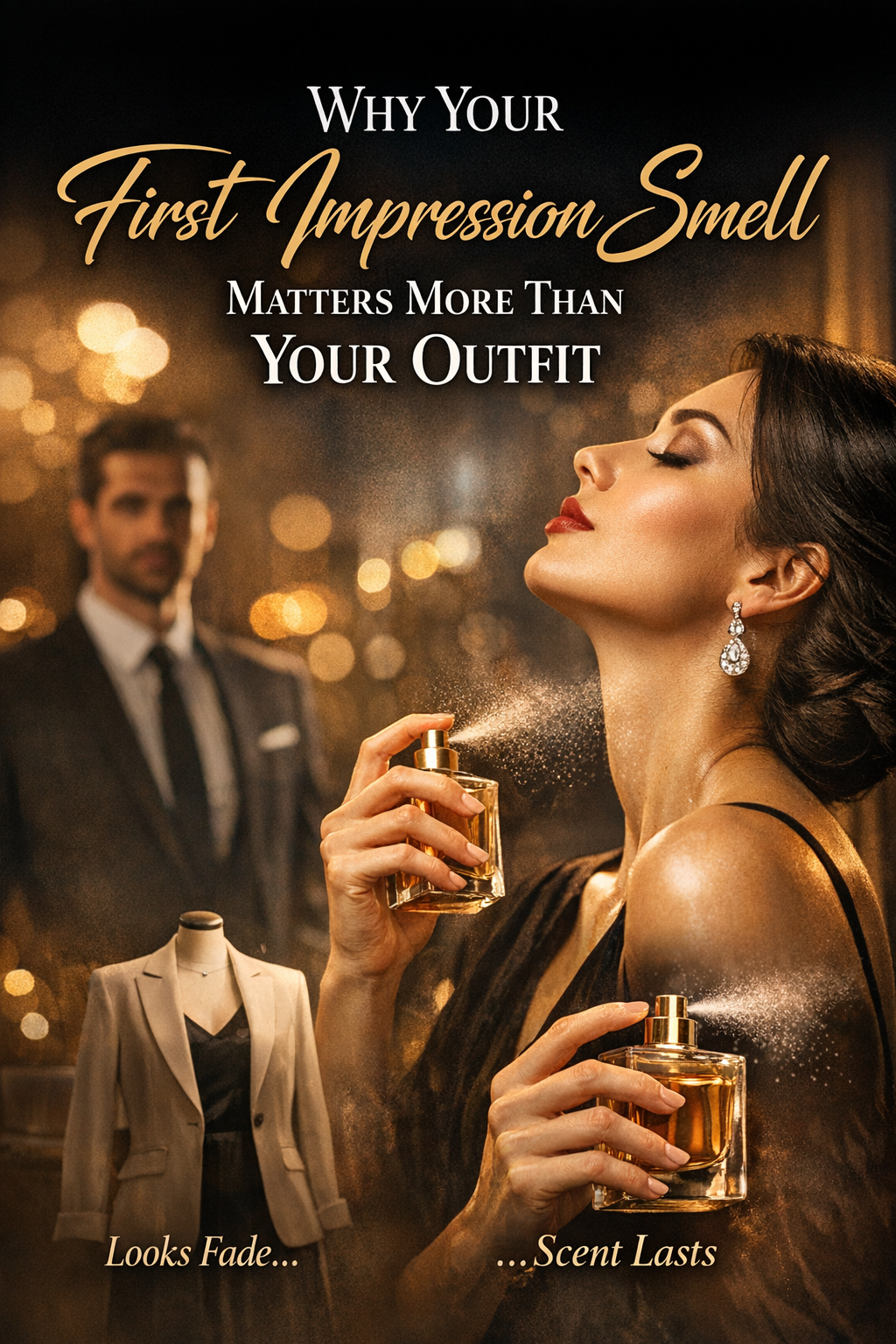
People think first impressions are visual.
They’re wrong—or at least incomplete.
Before someone processes your outfit, your brain is already reacting to scent. And unlike visuals, scent doesn’t go through logic first—it goes straight to emotion and memory.
If you understand this, you stop treating perfume as an accessory… and start using it as a strategic advantage.
1. Scent Hits Faster Than Style
When you walk into a room:
- Your outfit is seen
- Your scent is felt
Scent is processed by the limbic system—the part of the brain responsible for:
- Emotion
- Memory
- Attraction
That means people don’t just notice your fragrance—they experience it subconsciously.
By the time they consciously register your outfit, they’ve already formed a feeling about you.
2. Smell Creates Emotional Imprints (Outfits Don’t)
People forget what you wore.
They remember how you made them feel.
And scent is one of the strongest triggers of emotional memory. A specific fragrance can:
- Remind someone of you weeks later
- Trigger attraction instantly
- Create familiarity even after one meeting
Your outfit might impress.
Your scent lingers in memory.
3. The Power of Invisible Presence
Clothing only works when you’re in sight.
Fragrance works even when:
- You’ve walked past
- You’ve left the room
- You’re standing behind someone
This is called sillage—the scent trail you leave behind.
A strong, well-chosen fragrance creates an invisible presence.
People notice you before they see you—and remember you after you’re gone.
4. Scent Signals Identity Without Words
Your outfit can be copied.
Your scent—if chosen well—becomes uniquely yours.
Fragrance communicates:
- Confidence
- Attention to detail
- Taste level
- Social awareness
A refined scent tells people:
“This person understands presentation.”
A bad scent (or none at all) says the opposite.
5. The Mistake: Prioritizing Looks Over Sensory Impact
Most people spend:
- Time choosing outfits
- Money on clothes
- Effort on appearance
But treat fragrance as optional.
That’s backwards.
Because:
- Everyone sees clothes
- Very few people use scent strategically
This creates an opportunity.
While everyone competes visually, you dominate sensory space.
6. Attraction Is More Chemical Than Visual
This is where people get uncomfortable—but it’s reality.
Attraction isn’t just about what looks good.
It’s about what feels right.
Scent plays a role in:
- Compatibility perception
- Comfort levels
- Emotional response
A well-chosen fragrance can make someone:
- Want to be closer
- Feel relaxed around you
- Associate you with pleasure
No outfit can do that on its own.
7. When Outfit Wins (And When It Doesn’t)
Let’s be balanced.
Outfits matter:
- In highly visual environments
- In formal or fashion-focused settings
- For first visual judgment
But scent wins when:
- Interaction is close
- Conversations happen
- Memory is formed
Outfit gets attention.
Scent builds connection.
8. The Right Way to Use This Advantage
If you want to use scent strategically:
A. Match Scent to Environment
- Office → subtle, clean
- Events → bold, projecting
- Dates → intimate, warm
B. Control Projection
Too strong = offensive
Too weak = forgettable
You want:
noticeable, not overwhelming
C. Be Consistent (Signature Effect)
Wearing the same scent repeatedly creates:
- Recognition
- Memory association
- Identity
Random scents = no identity.
9. What Most People Get Wrong
They:
- Chase compliments instead of building identity
- Over-apply thinking stronger = better
- Follow trends instead of choosing what fits them
That leads to:
- Inconsistency
- Overpowering presence
- Forgettable impressions
10. Final Reality
You can be well-dressed and still be forgettable.
But if you smell right—
you create a multi-sensory impression people don’t ignore.
The smartest approach in 2026 is not choosing between style and scent.
It’s understanding this:
- Outfit gets you seen
- Scent gets you remembered
And in a world where attention is short…
Being remembered is the real advantage.